Why Every Culture Has a Festive Drink
From spiced wines to sweet milk drinks, celebrations everywhere are marked by shared cups and symbolic sips — a ritual older than the holidays themselves.
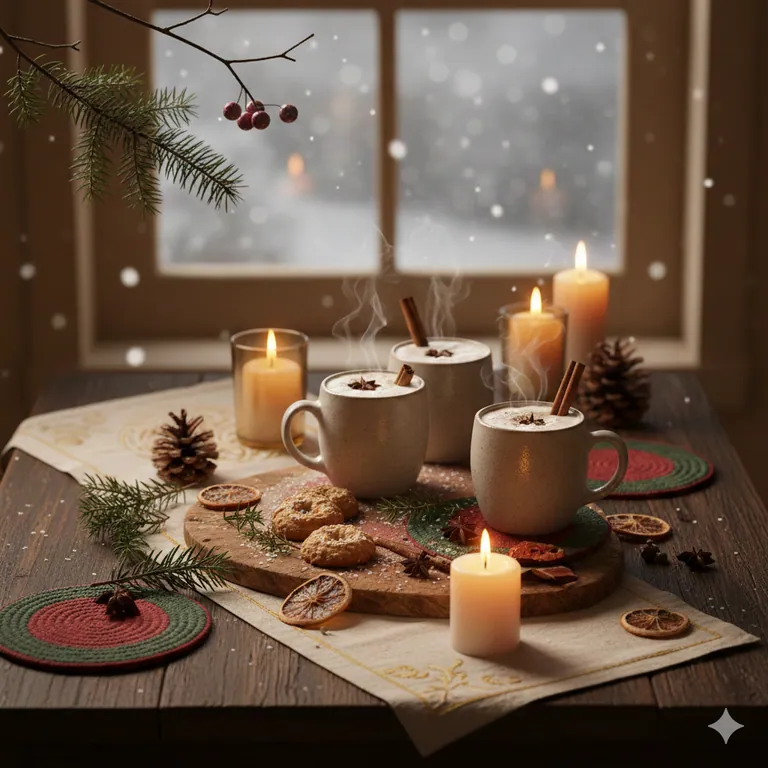
Why Every Culture Has a Festive Drink
Go anywhere in the world when the calendar turns to celebration, and you will find a cup in someone’s hand.
It might be steaming with spices in Germany, frothy with cream in the Americas, or bright with citrus in Italy. The ingredients change, but the impulse remains exactly the same.
We don’t just eat to celebrate. We drink.
But why?
It isn’t simply about thirst. A festive drink is a signal. It marks a shift from the ordinary to the extraordinary. It transforms a gathering into an occasion.
It is liquid ritual.
The Bowl as a Centerpiece
Before we had individual cocktails, we had the bowl.
The Wassail bowl in medieval England. The punch bowl in colonial America. The communal pot of Glögg in Scandinavia.
There is a profound psychology to the shared vessel. It forces interaction. You cannot serve yourself without acknowledging the group. It represents a shared resource—a pool of plenty that everyone draws from.
When we gather around a punch bowl, we are enacting an ancient truce: we are sharing the same supply, trusting the same source, and becoming, for one evening, a single unit.
Spices: The Scent of Occasion
Why does "holiday" taste like cinnamon, cloves, and nutmeg?
Today, these spices are cheap. But for centuries, they were currency. They traveled thousands of miles on dangerous seas. To use them was to burn money for the sake of your guests.
Spicing a wine wasn’t just about flavor—it was a flex. It was a way of saying, “You are worthy of my best.”
Furthermore, spices warmed the blood. In the depths of winter, before central heating, a drink that could flush the cheeks and warm the chest was not a luxury—it was a necessity for survival that became a symbol of joy.
Milk and Cream: The Taste of Abundance
Eggnog in the US. Coquito in Puerto Rico. Rompope in Mexico.
Why do so many cultures turn to heavy, dairy-based drinks for the holidays?
Because historically, milk, cream, and eggs were precious. They were the fats that sustained life. To mix them with sugar (another luxury) and spirits was to create a "calorie bomb" of prosperity.
Drinking a rich, creamy cocktail was a way of consuming the harvest's abundance, banking warmth against the cold months ahead. It is comfort in its most caloric form.
The Toast: A Universal Language
Skål. Santé. Kampai. Salud. Cheers.
Every culture has a word for it. The act of raising a glass is perhaps the most universal gesture of peace we have.
Historians debate the origins—some say clinking glasses was to ward off spirits, others say it was to spill wine into each other's cups to prove they weren't poisoned.
But the emotional truth is simpler. To raise a glass is to synchronize. For one moment, everyone in the room is doing the same thing, focusing on the same wish, looking each other in the eye.
It is a moment of perfect alignment.
A Ritual Older Than the Holidays
We drink to remember. We drink to forget. We drink to warm up.
But mostly, we drink to connect.
Whether it’s:
- A hot cider passed around a fire,
- A glass of champagne at midnight,
- Or a simple cup of tea shared in silence,
The drink is just the vehicle. The destination is togetherness.
Concepts explored
Drinks that support this ritual
Mulled Wine
A warm and aromatic spiced red wine, gently simmered with citrus and spices. The quintessential European winter warmer.
Good for Holiday parties
Classic Eggnog
A rich, creamy, spiced holiday drink closely tied to winter gatherings, shared celebrations, and Christmas traditions.
Good for Christmas evenings
How this story usually leaves readers feeling
festive • communal • historical