The Psychology of the Holiday Toast
Why do we feel the need to clink glasses and say words before we sip? It’s a moment of vulnerability that transforms a drink into an agreement.
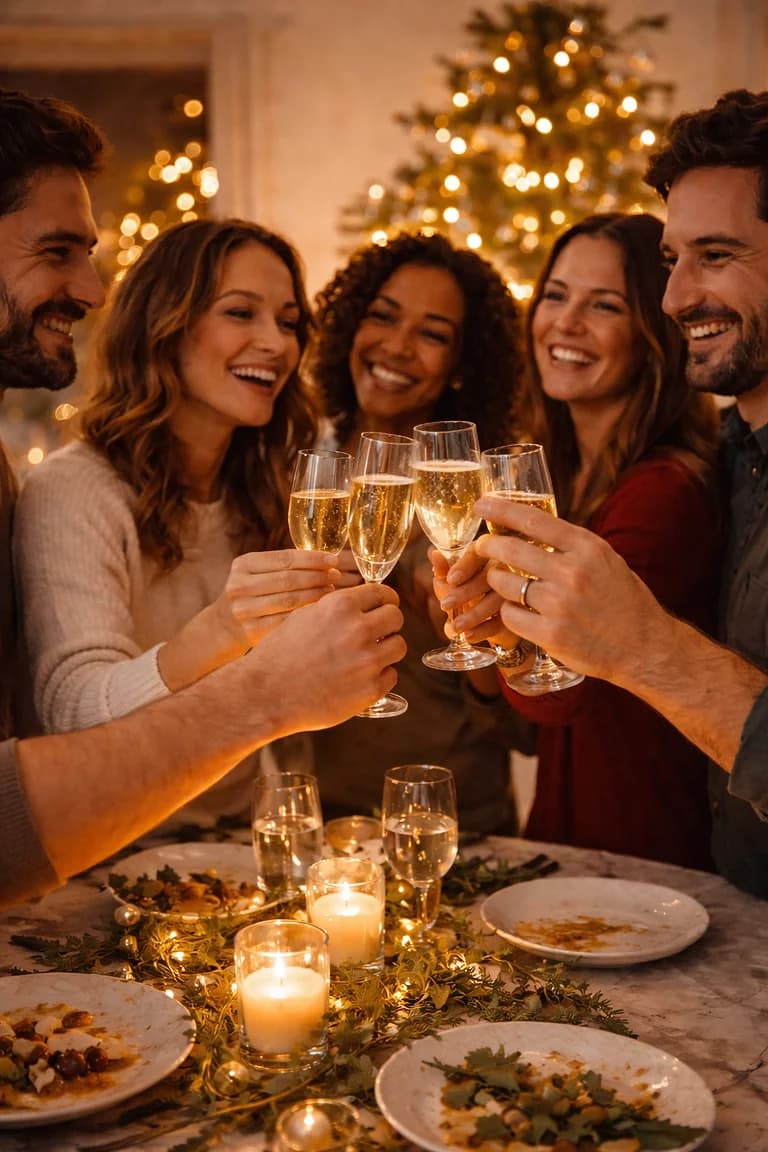
The Psychology of the Holiday Toast
The room quiets. Someone taps a glass with a spoon. We all stand, raise our hands, and wait.
The Toast.
It is one of the few rituals that has survived almost every era of human history. From ancient Greek libations to the modern wedding speech, the impulse remains: We cannot drink until we agree on why we are drinking.
The Synchronization of the Group
Drinking is often an individual act. You sip when you are thirsty.
Toasting is a collective act. It forces synchronization.
For that brief moment, everyone in the room must stop what they are doing. They must look at the same person. They must hold their glass at the same height.
Psychologically, this creates a "shared attention state." It dissolves the individual into the group. It says: We are together in this.
The Clink: Trust and Noise
Why do we touch glasses?
Legends say it was to spill wine into each other's cups to prove they weren't poisoned. Others say it was to make noise to ward off evil spirits.
But emotionally, the "clink" is tactile proof of connection. It closes the physical gap between us. It is a high-five with glass.
Eye Contact: The Contract
In many cultures, it is considered bad luck—or even rude—to toast without making eye contact.
Why? Because a toast is a contract.
When we say "Cheers" or "To Health," we are making a wish for the other person. To look away is to invalidate the wish. To look them in the eye is to sign the contract.
A Moment of Hope
Especially at New Year's, the toast is a bridge. We raise a glass to what is behind us, and we drink to what is ahead.
It is a liquid prayer. A moment where we collectively agree to hope for something better.
Concepts explored
Drinks that support this ritual
Champagne
The definitive sparkling wine from France, synonymous with New Year's Eve celebrations, luxury, and the art of the toast.
Good for New Year's Eve countdown
Sparkling Wine
Bright, celebratory, and alive with bubbles. Wine that marks a moment.
Good for Celebrations
How this story usually leaves readers feeling
celebratory • united • hopeful